LA MAISON NOIRE
The Luxury of Restraint
At their Bucks County estate, Patrick Pastella and Kanitha Burns bring centuries of history into the present, creating a home defined not by excess, but by simplicity, craftsmanship and the confidence to know when enough is enough.
PHOTOGRAPHY BY PATRICK PASTELLA & JUAN VIDAL
There may be no better way to understand La Maison Noire than with a glass of champagne in hand.
Following our Luxury Equestrian Network Bucks County event this summer, our group was invited back to Patrick Pastella and Kanitha Burns’ estate for an after-party. Music was playing, people were laughing, and guests wandered from one building to the next, discovering the property gradually rather than arriving at a front door and experiencing it all at once. It was moody, a little unexpected and deeply experiential. La Maison Noire, we quickly realized, is not simply a house. It’s a vibe.
Patrick describes the property as “a mood that shifts with the weather, time of day and whoever you are spending time with.” More than a collection of beautifully designed spaces, he sees the estate as a stage for the people who inhabit it. On that summer evening, with music playing and guests spilling between centuries-old stone buildings and contemporary spaces, it was easy to understand exactly what he meant.
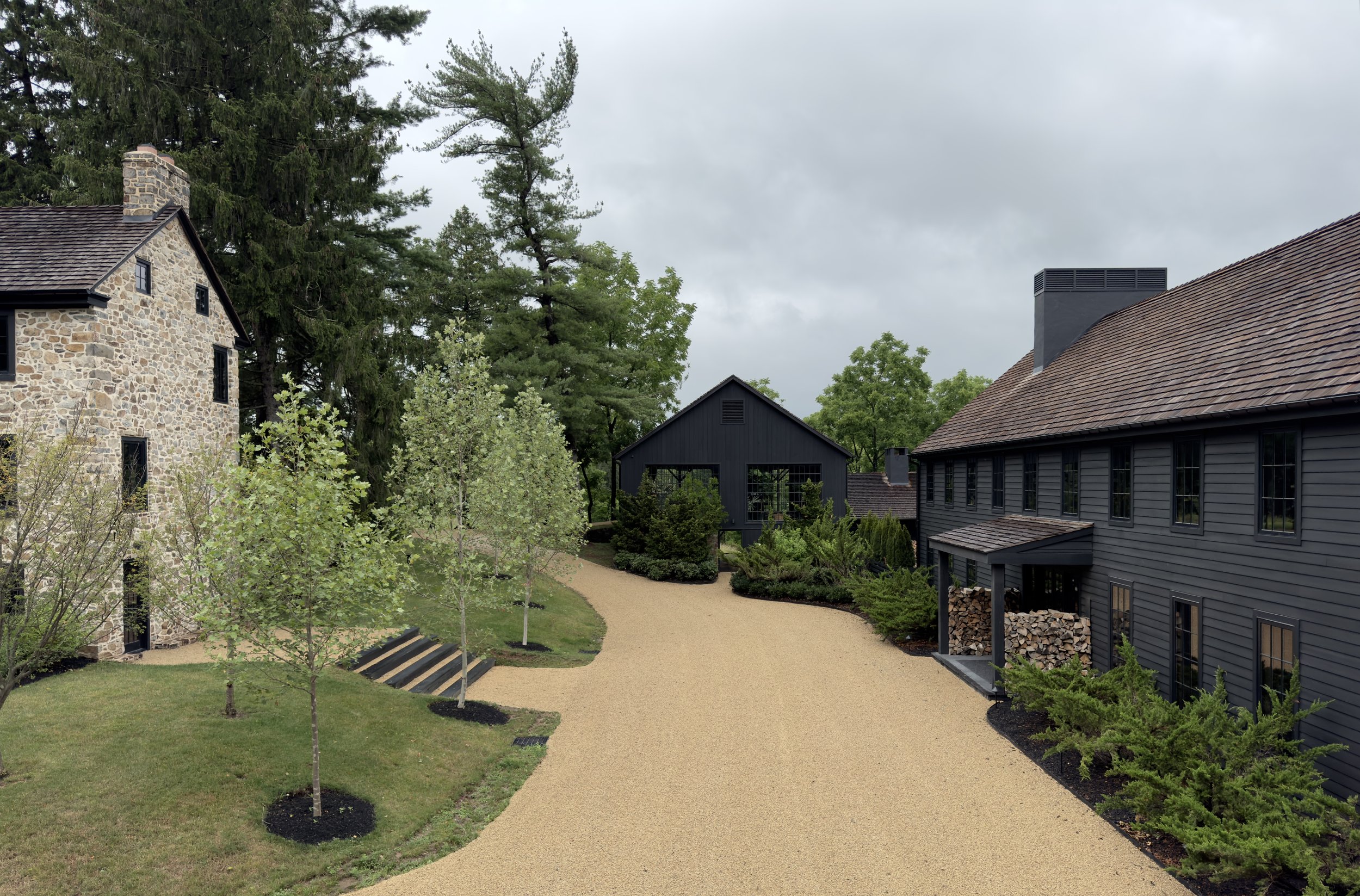
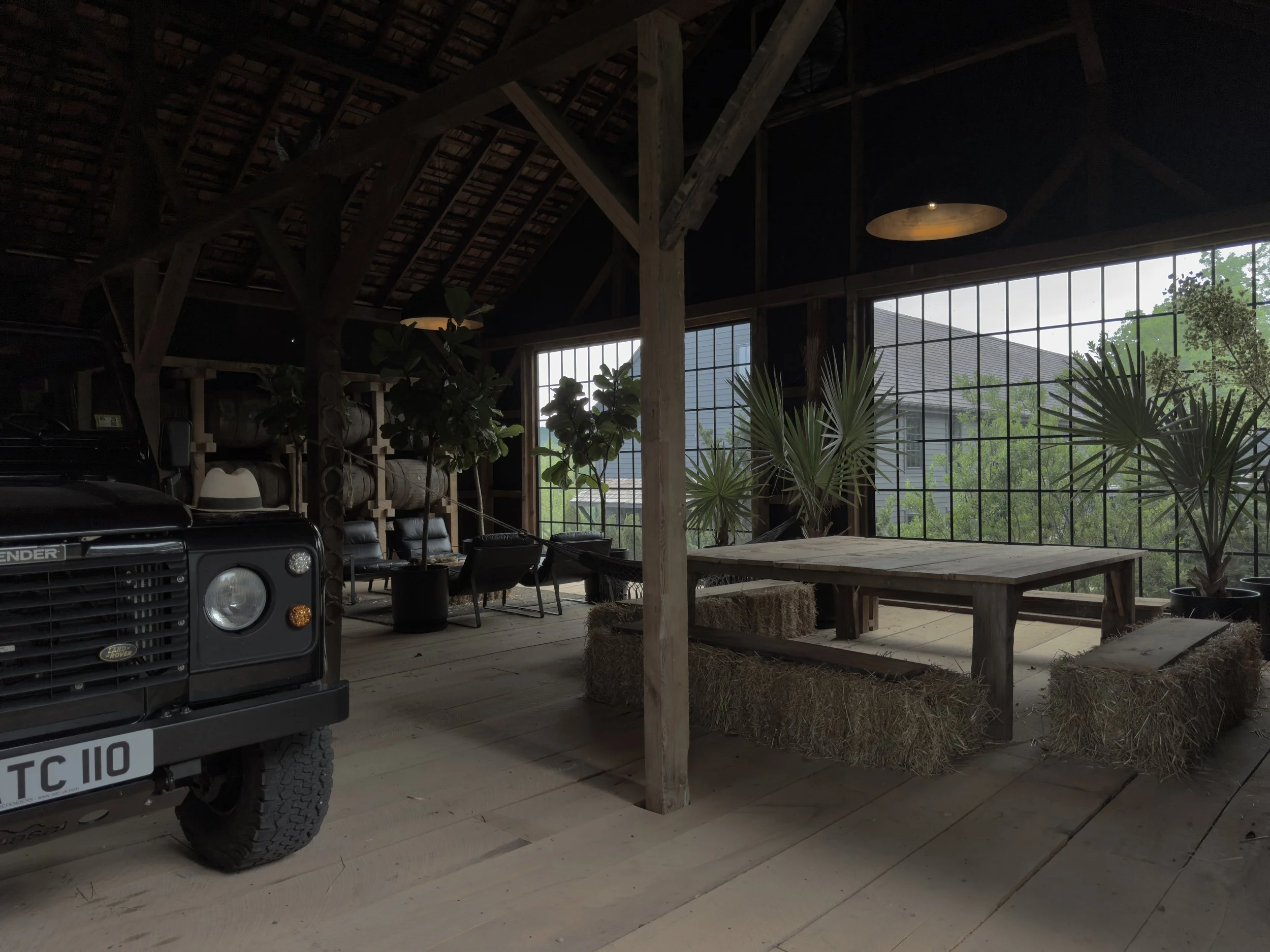
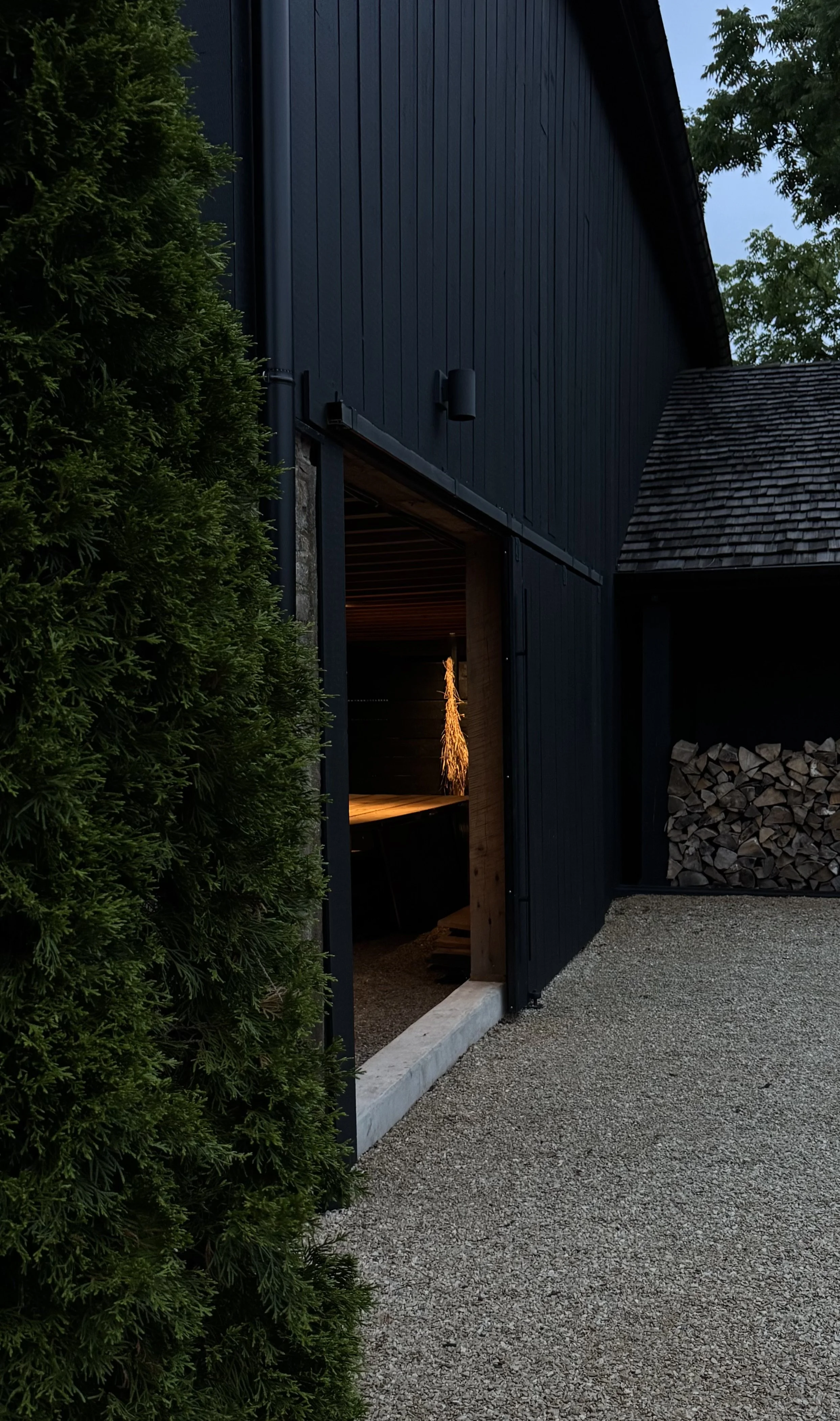
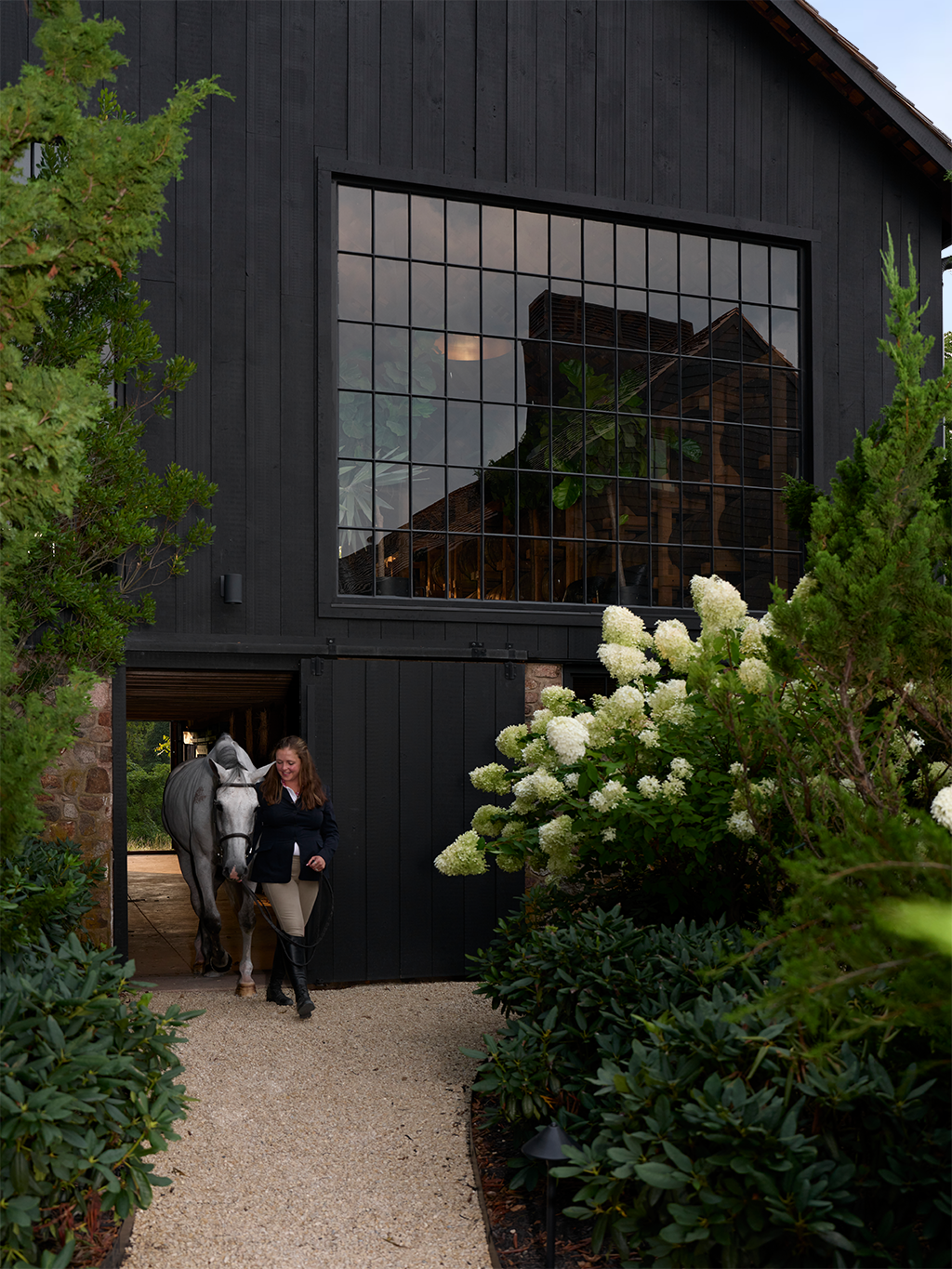
The experience begins almost as soon as you turn onto the property. One of the historic stone buildings greets you first, sitting near the entrance with the presence of an old gatekeeper’s house. Continue toward the main residence and another scene begins to reveal itself: through the opening of the circa-1850s barn, a wall of whiskey barrels rises behind Patrick’s rugged Land Rover Defender, parked across weathered wood planks. Beyond it, old stone gives way to wood and glass; dark spaces open into light ones. Each building has its own character, and moving between them becomes part of the experience.
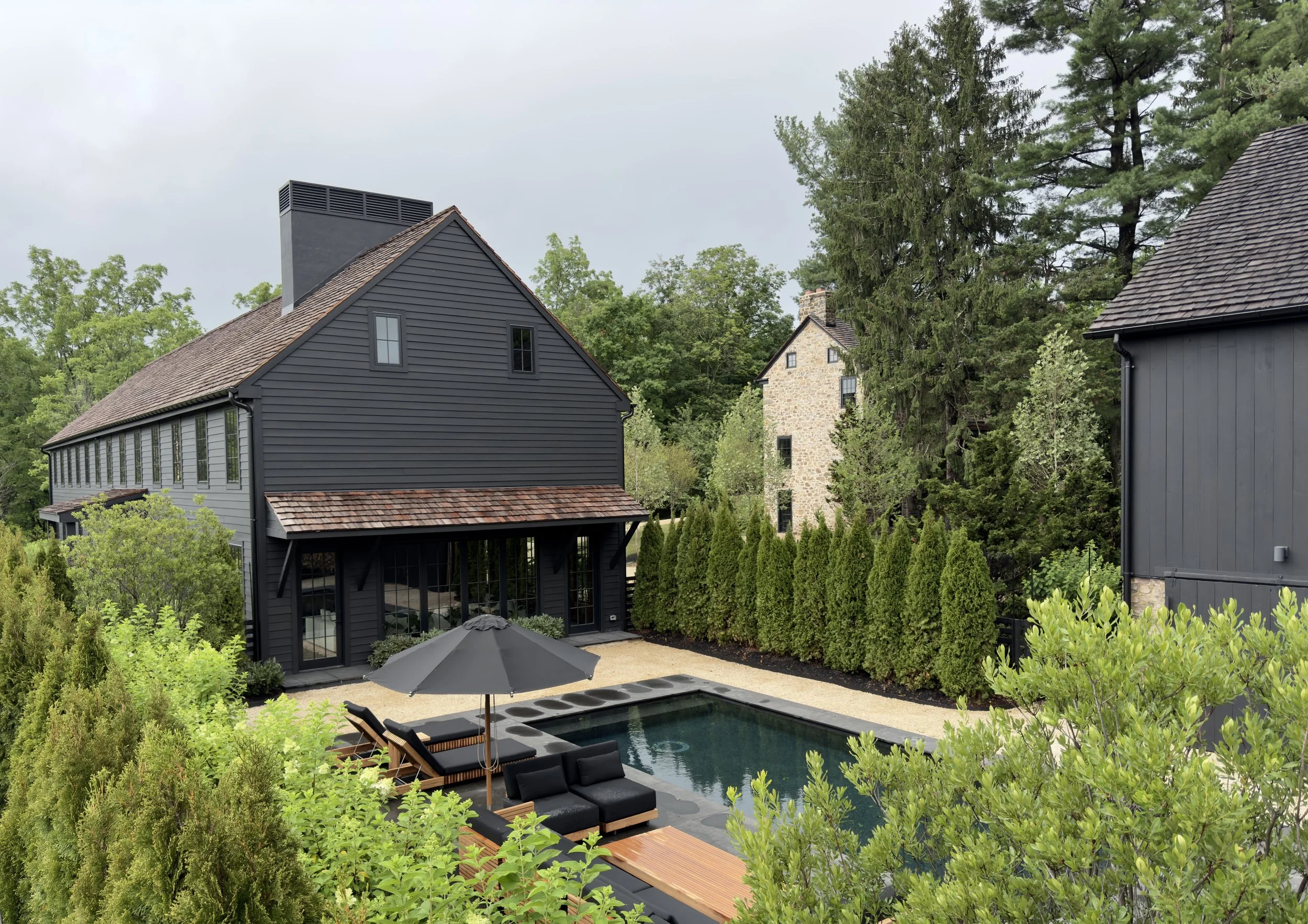
It is a true gentleman’s farm—not as a nostalgic recreation of one, but as an estate that has been allowed to evolve. A circa-1740 stone farmhouse and 1850s barn anchor La Maison Noire in its Bucks County past, while the contemporary structures introduced by PASTELLA | BURNS carry that history forward. The transitions are deliberate, but they don’t announce themselves. In fact, it can be difficult at first to determine where the history ends and the new architecture begins.
Visitors regularly ask Patrick when the main house was renovated. The irony is that it wasn’t. The house is new. The sense that it has always belonged here is entirely intentional.
That interplay between old and new is central to the way PASTELLA | BURNS approaches properties like La Maison Noire. When considering a property, Patrick says they begin with what cannot be changed—the address, the views and the surrounding homes. Buildings are another matter. The firm specializes in what he calls “Gentleman’s Farms,” many with histories reaching into the early 1700s, and looks for opportunities to enhance that storied past while introducing the standards of modern living.
At La Maison Noire, generations of additions and alterations had obscured the original simplicity of the stone farmhouse and barn. Rather than continuing to add, the team began by taking away, peeling back those layers to reveal the strength of the original structures. “Oftentimes, it’s the original version that is most striking,” Patrick says. The same simplicity then became the language for everything that followed. The new buildings are straightforward in form, their facade heights, window proportions and massing carefully considered in relation to their historic counterparts. For Patrick, La Maison Noire became an exercise in “sight lines, massing and restraint.”
That restraint is perhaps surprising for an estate in which nearly everything has been considered down to the smallest detail. Yet it is fundamental to Patrick and Kanitha’s definition of luxury.
“True luxury isn’t discovered through an abundance of bells and whistles,” Patrick says. La Maison Noire is deliberately quiet. Televisions don’t dominate every room. Artwork isn’t competing for attention. Technology has not been layered into the house to such an extent that living in it becomes dependent upon it.
“The luxury found at La Maison Noire is ease of living,” Patrick explains. “A home that doesn’t fight you but embraces the art of living simply.”
That philosophy extends beyond the main residence. La Maison Noire is substantial, but it doesn’t function as one enormous house. It unfolds as a collection of buildings and experiences, each with a reason to leave one space and discover another. “We favor a breakdown of spaces where there is a disconnect from one experience to another,” Patrick says. The separation creates visual cues, distance and privacy, allowing the estate to feel intimate despite its overall scale.
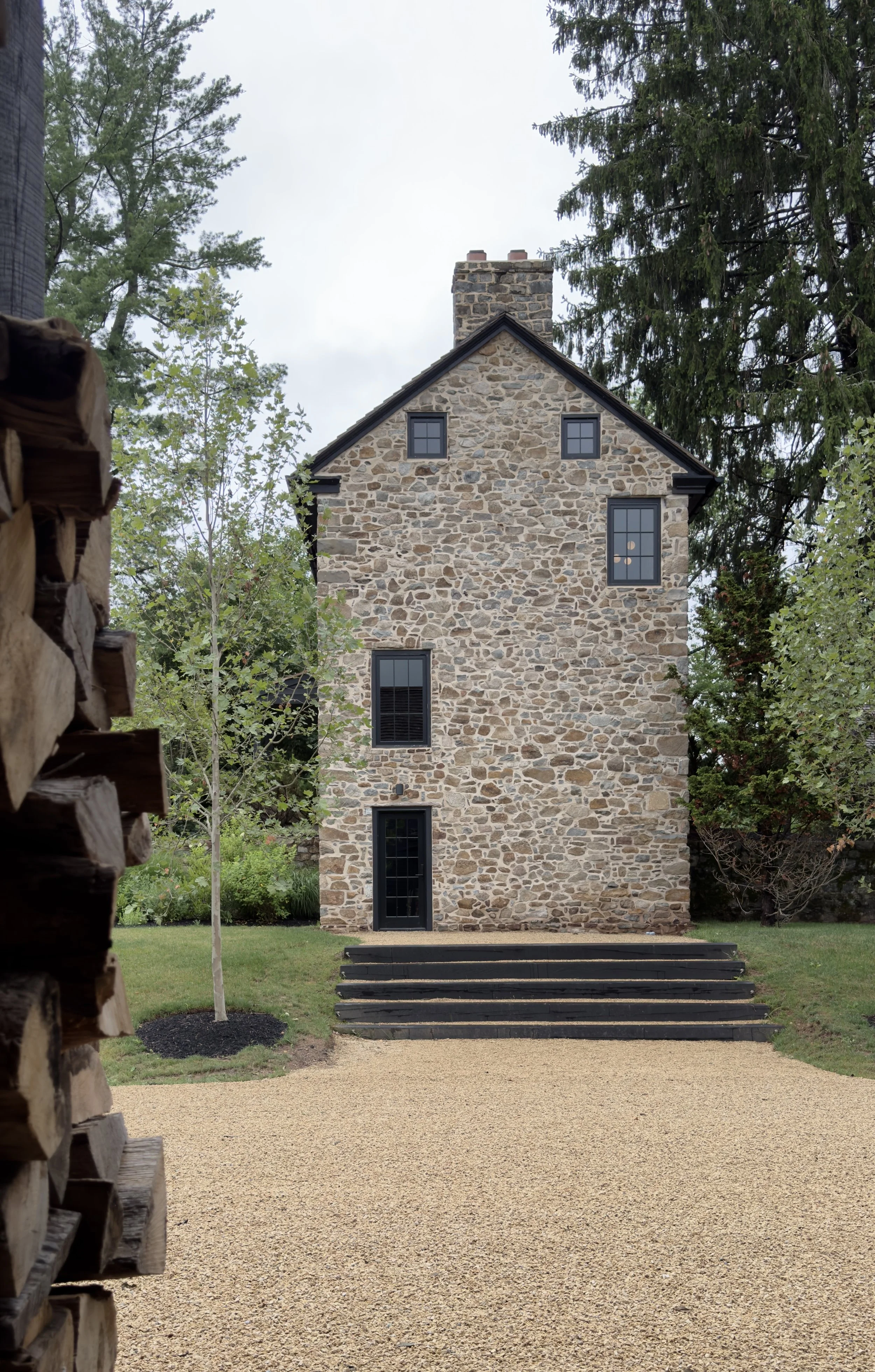
The original stone farmhouse, for example, found a natural second life as the guest house. Its three stories offered an opportunity to give each level its own purpose: private guest accommodations occupy the upper floor, while the middle level becomes a place to gather over drinks. Below, the largely subterranean lowest level has been transformed into a wine cellar and lounge.
The circa-1850s barn evolved somewhat less formally. Patrick and Kanitha knew they wanted to give the historic structure a new life as a gathering place, but one of its most memorable spaces came together almost by accident. When Patrick spotted an advertisement for old barrels, someone was dispatched 100 miles with a U-Haul and instructions to bring back as many as the truck could hold.
“Bam—barrel room,” Patrick recalls.
It is a wonderfully unceremonious origin story for a space that now feels inevitable, and an example of the willingness to let an idea develop rather than force a preconceived solution onto an old building. The structures may no longer serve the agricultural purposes for which they were built, but their character remains central to the experience of the estate.
Inside the main residence, restraint doesn’t mean a lack of detail. In fact, much of what appears simple at La Maison Noire is only possible because of an extraordinary degree of customization behind it.
PASTELLA | BURNS operates somewhat differently from a traditional design or development firm. Design and architecture are produced in-house, the company has its own construction managers, and through a sister company it can fabricate much of the architectural interior—including kitchens, vanities, furnishings, rugs and closet systems. Patrick focuses much of his attention on business development and high-level design, working with the team to establish the program, aesthetic intent and overall direction of a project. Kanitha oversees business operations while also actively designing products and materials for their interiors brand. It is a boutique operation, but one that Patrick describes as unusually vertically integrated.
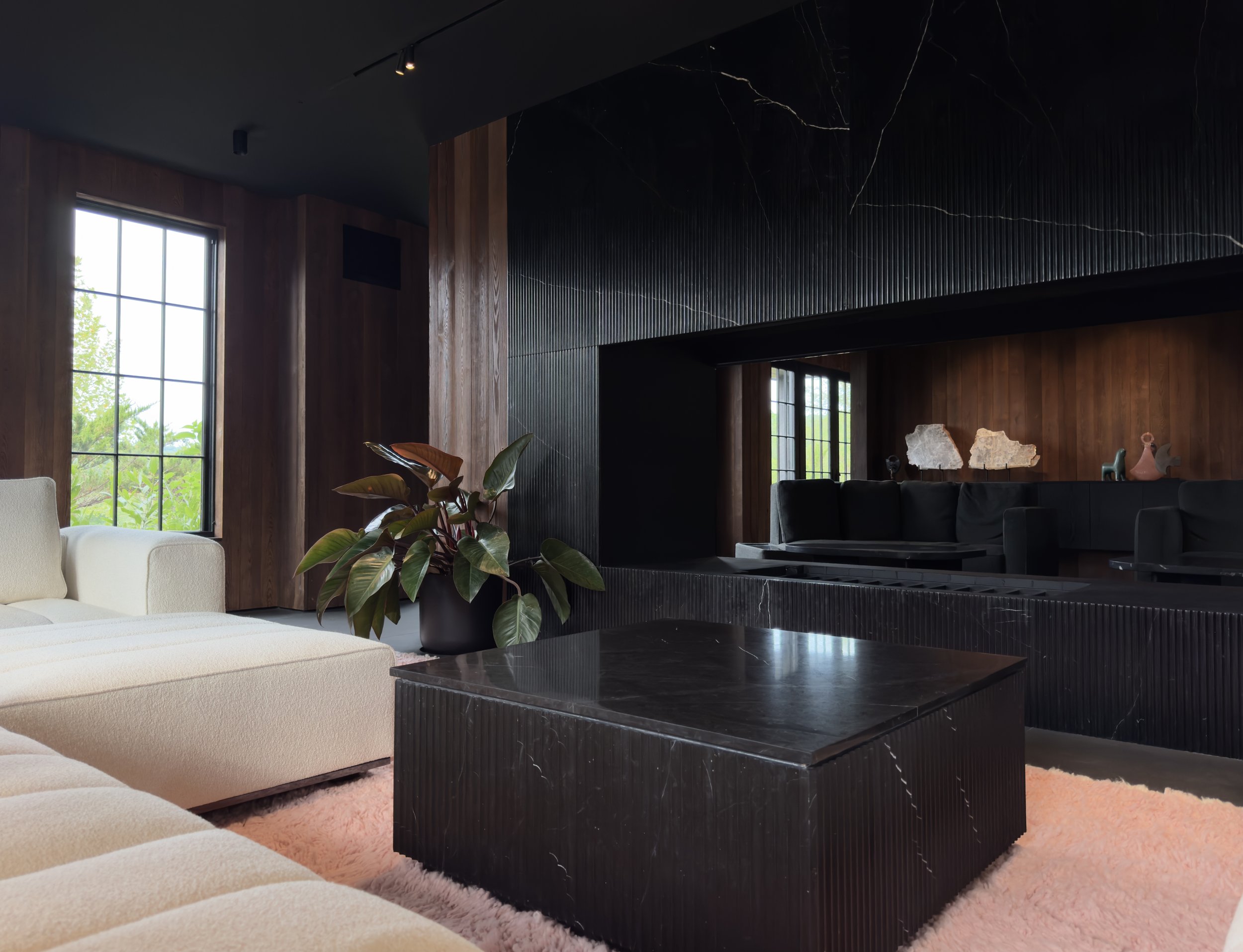
That integration allows the details of La Maison Noire to become highly specific to the property. Interior walls are clad extensively in Hinoki cypress, a slow-growing Japanese wood selected for its subtle grain and surface tones. Patrick says the wood was sourced from sustainably managed Japanese forests with generational harvesting rotations dating back hundreds of years. It is a material rarely seen in such abundance, and here its quiet warmth becomes part of the home’s deliberately limited palette.
Then there are the chandeliers.
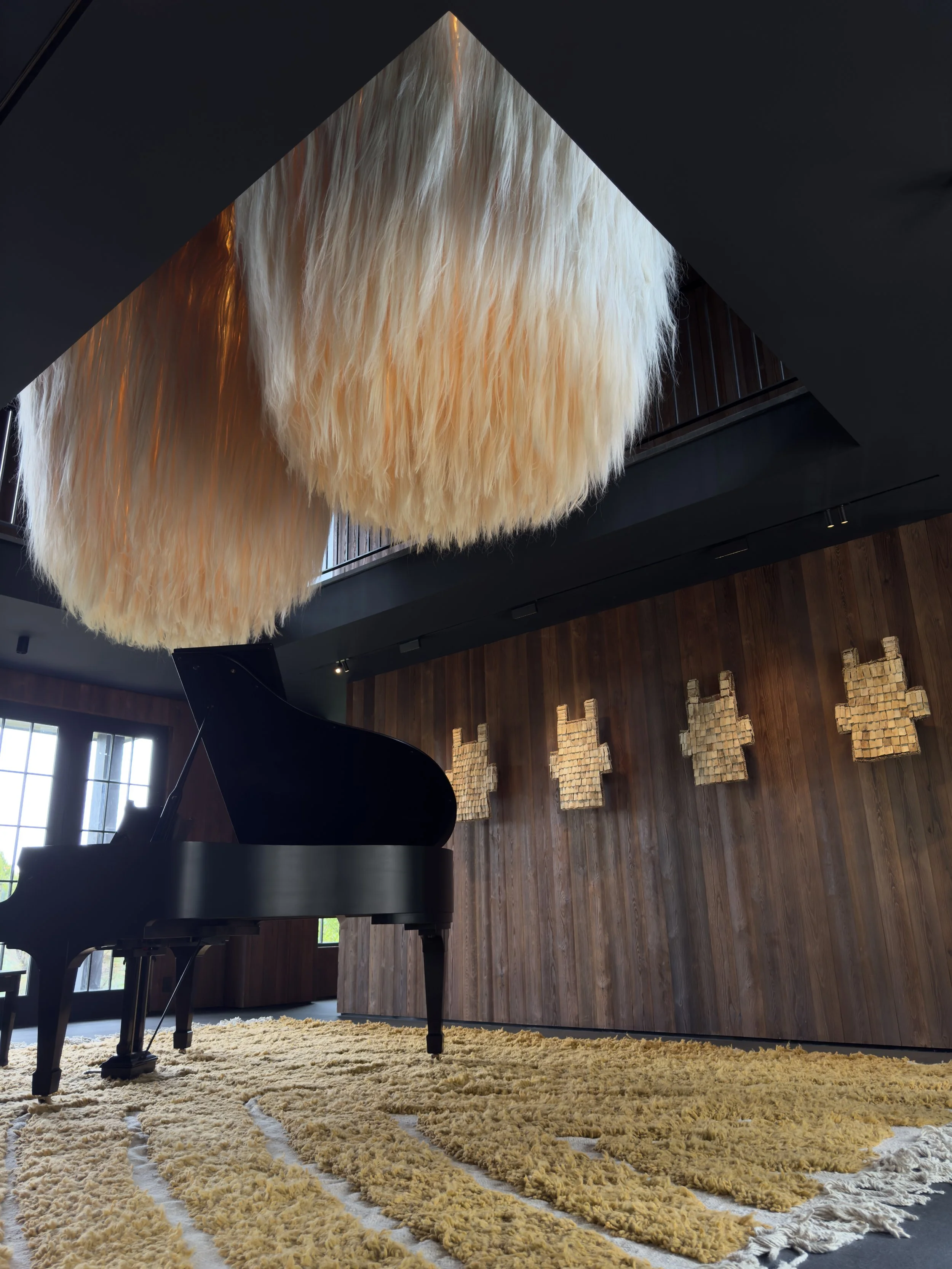
Suspended overhead, the enormous sculptural fixtures are composed of long, wispy fibers that look remarkably like horsehair. Their story began years earlier and thousands of miles away, when Patrick wandered into a gallery while traveling in San Miguel de Allende, Mexico. Inside a room of stone walls and floors hung what he remembers as an extraordinary glowing orb. He stood looking at it for nearly an hour before eventually tracking down the artisan with a question: “How big can you actually make these things?”
Quite large, as it turned out.
Created in collaboration with the studio of Angela Damman, the fixtures are made from fibers derived from a relative of the agave plant. The material looks and even feels much like horsehair, transforming an encounter in a Mexican gallery into one of the most memorable details at La Maison Noire.
“La Maison Noire is a mood that shifts with the weather, time of day and whoever you are spending time with.”
PATRICK PASTELLA
“We enjoy the bespoke process,” Patrick says. “It’s difficult to do something nobody else has ever done.” But originality here isn’t about collecting unusual materials for their own sake. Each project begins with its own carefully edited material palette—what Patrick calls its “design language”—and the discipline comes in staying true to it.
“More is not always better,” he says. “Oftentimes knowing when to stop designing is just as important as the design.”
The same discipline that shapes the finished spaces also informs how they are built. With design and construction management working together, decisions are not handed from one disconnected team to another. Plans are developed with an understanding of how something will be fabricated, who will produce it and when it needs to arrive. Materials can be purchased months ahead of schedule, reducing supply-chain variables and allowing construction to proceed with fewer interruptions.
When asked how the team balances that level of design ambition against budget, constructability and long-term maintenance, Patrick’s answer is emphatic: “Simplicity—simplicity—simplicity.”
Simple forms are easier to understand, bid and build. A controlled material palette creates clarity. Even the landscape follows the same thinking, relying on hardy groupings of evergreens, grasses and perennials, with foliage often taking precedence over high-maintenance flowers.
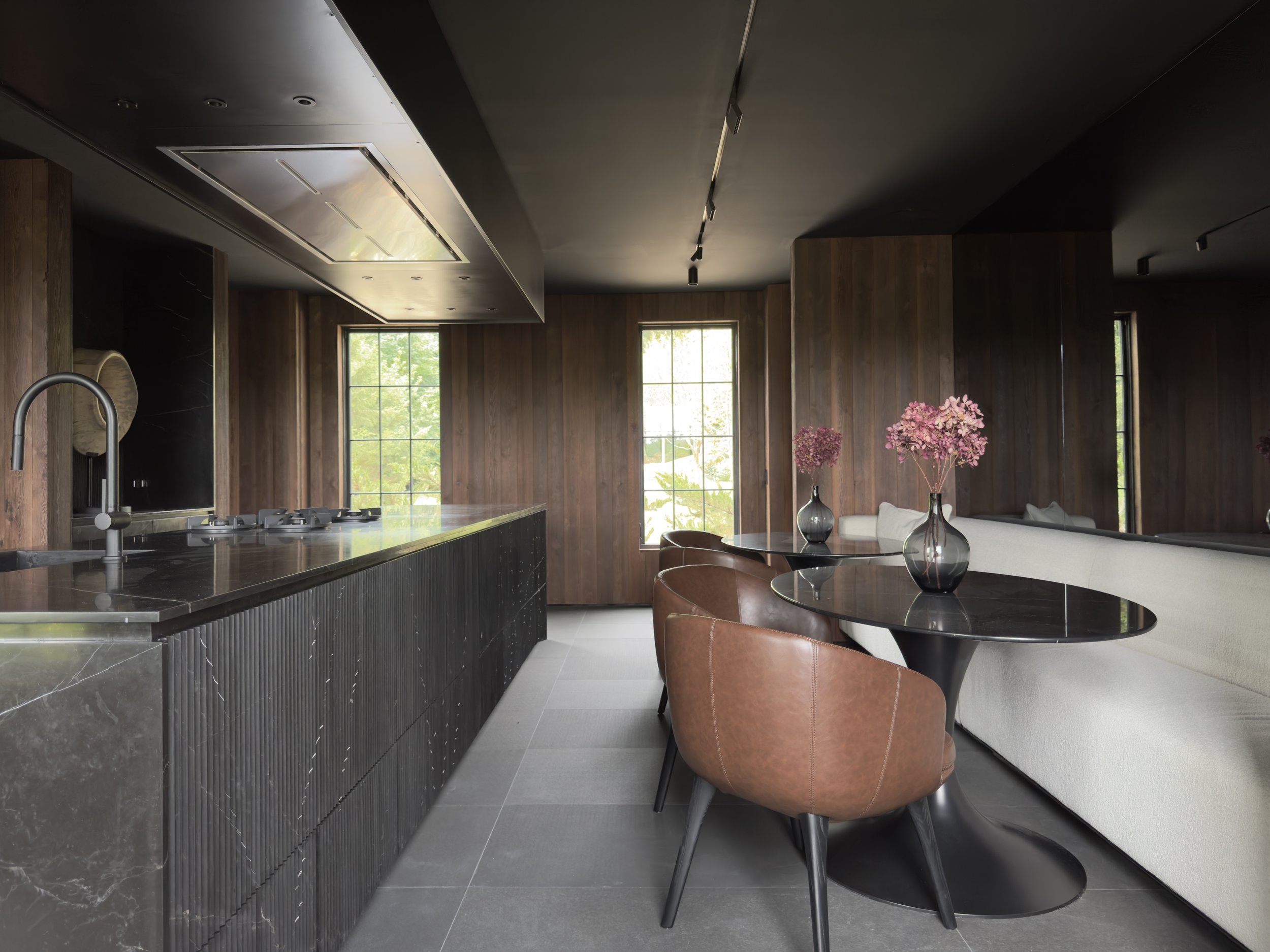
“More is not always better. Oftentimes knowing when to stop designing is just as important as the design.”
PATRICK PASTELLA
For Patrick, however, one of the greatest challenges of creating a property like La Maison Noire has little to do with design. It is the ability to make decisions—and make them early.
Homeowners understandably think about construction according to when they will physically see something happen. A kitchen may not be installed for ten months, but the decisions and purchases necessary to make that installation happen may be required today. Creating a complex property therefore requires an unusual amount of commitment to things that won’t become tangible for months.
“If you are still making decisions while under construction, it’s already too late,” Patrick says. The core decisions need to be made and then, perhaps just as importantly, respected. Designing La Maison Noire for themselves allowed Patrick and Kanitha to move at a pace most clients cannot, precisely because years of experience have taught them to make those decisions early and resist continually revisiting them.
Yet decisiveness does not mean rigidity. Ask Patrick what someone should understand before purchasing land with dreams of creating a legacy property and his first word is “compromise.”
There is no perfect property, regardless of budget. Zoning, time, cost and neighboring properties will inevitably impose realities that no design can completely erase. Success requires a team clever enough to find opportunity within those constraints and an owner willing to adjust expectations without losing sight of the larger vision.
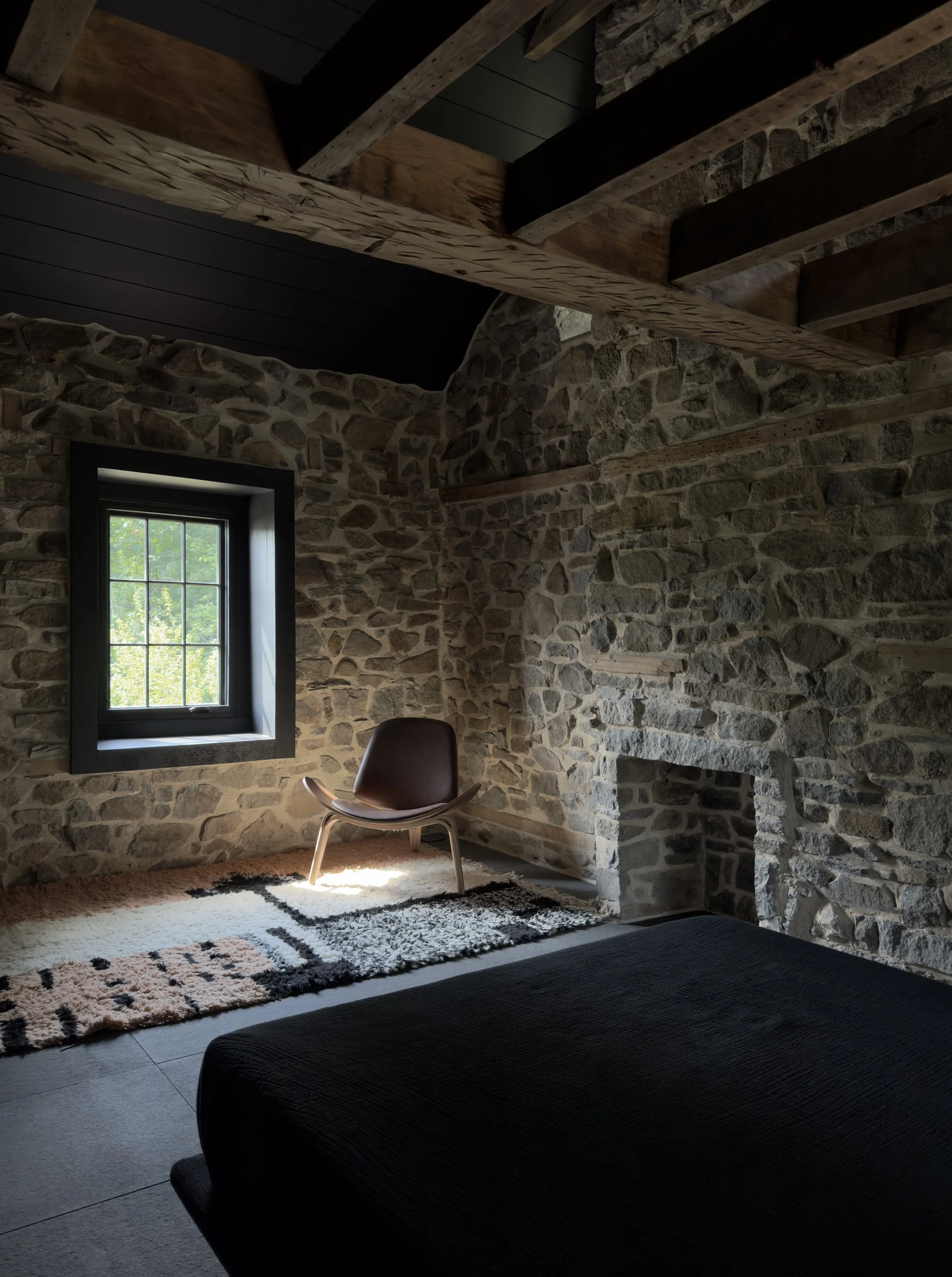
“If you can compromise, and stick to your decisions, then you are set up for success,” Patrick says.
Perhaps that balance—between flexibility and discipline, history and modernity, craftsmanship and simplicity—is what ultimately defines La Maison Noire. It is a property where a nearly 300-year-old stone farmhouse can coexist with a newly constructed residence, where Japanese cypress meets plant fibers discovered in Mexico, and where an old barn can find an entirely new purpose without losing the character that made it worth preserving in the first place.
Patrick hopes visitors leave with an appreciation for the level of thought and effort required to consider every element of a property—to make rather than merely specify, and to carry an idea through to its smallest details. At La Maison Noire, that attention is evident everywhere, but so is the restraint behind it. Perhaps its greatest luxury isn’t how much has been created, but the clarity with which everything has been chosen. ∎
LA MAISON NOIRE
Now Available
La Maison Noire is currently offered for sale through Kurfiss Sotheby’s International Realty.
Douglas Pearson
Kurfiss Sotheby’s International Realty
c. 267.907.2590